

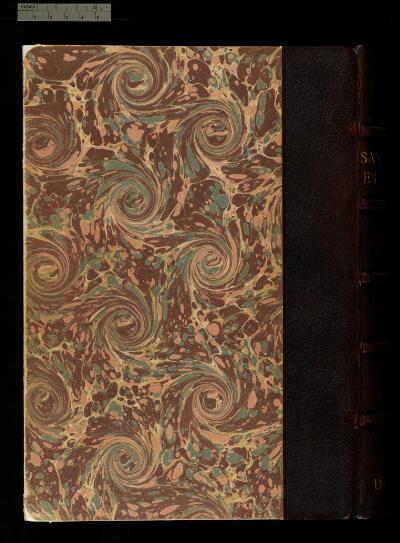
Kitāb Kanz al-daqāʼiq : ʻalá madhhab al-Imam al-Aʻẓam Abī Ḥanīfah al-Nuʻmān ibn Thābit raḍiya Allāh ʻanh, bi-rasm Mawlānā al-Sulṭān al-Malik al-Ẓahirī Saʻīd Muḥammad Jaqmaq, aʻazza Allāh anṣārah
كتاب كنز الدقائق : على مذهب الإمم الأعظم أبي حنيفة النعمان بن ثابت رضي الله عنه، برسم مولانا السلطان الملك الظهري سعيد محمد جقمق، أعز الله انصارة · Folio 1a (first section): Ancien droit islamique
- লেখক
- ẓāhirī, tamr ibn ʻabd allāh al-jamālī al-malikī; jaqmaq; nasafī, ʻabd allāh ibn aḥmad; ṣafā, jirjis
- ভাষা
- আরবি
- গ্রন্থাগার
- Library of Congress, Washington
- শেলফমার্ক
- KBP300.N37 A35 1400z
চাকা ঘুরিয়ে বা দুই আঙুলে বড়-ছোট করুন, টেনে সরান; ← → দিয়ে পাতা উল্টান। ছবির স্বত্ব সংশ্লিষ্ট গ্রন্থাগারের।
পরিচিতি
Kanz al-daqāʼiq (The treasure of exactitudes) is a summary of Islamic legal prescriptions according to the Hanifite school of sharia law. It covers many aspects of ritual and of personal life, such as purity during menstruation, as well as obligations and procedures pertaining to marriage, divorce, inheritance and other aspects of gender relations. The work also covers commercial transactions, contracts, and manumission of slaves. The table of contents is in matrix form for easy reference to the book's many subjects. It is not clear whether the author, al-Nasafi (died 1310), also known as Abu al-Barakat al-Nasifi, was originally from Central Asia or from south-central Iran. He is known to have studied law with leading scholars and made the pilgrimage to Mecca, after which he traveled to Baghdad. One of his works, 'Umdat 'aqīdat ahl al-Sunnah (Pillars of Sunni belief) was edited and published in the 1840s by British scholar William Cureton (1808-64). There are four Sunni schools of fiqh (religious jurisprudence), all named for their respective founders, Abu Hanifah (circa 699-767), Malik ibn Anas (circa 711-795), al-Shafiʻi (767-820), and Ibn Hanbal (780-855). Each of these schools bases its codifications of law on the Qurʼan and the sunnah (sayings and practices of the Prophet Muhammad), supplemented by rules for interpreting these fundamentals as changing times or as new conditions may require. The four schools spread with the geographic expansion of Islam, and one or another became the principal school in different countries or regions. All are mutually recognized as authoritative. The manuscript was commissioned by or presented to the Egyptian Mamluk ruler Jaqmaq (died 1453). The title is contained in an ornate gilt medallion and the text is framed in red, accompanied by numerous marginal notes. There is water damage throughout and missing text has been repaired or replaced. There is no colophon giving date or place of copying. World Digital Library. Teatise on Islamic law accoring to the Hanafi madhhab.
পাঠকের মন্তব্য (০)
এখনও কোনো মন্তব্য নেই। প্রথম মন্তব্যটি আপনিই করুন।
ছবিসহ ও লিংকসহ মন্তব্য অ্যাডমিন দেখে প্রকাশ করেন।
আরও পাণ্ডুলিপি
 আরবিHādhā Sharḥ Ṣalāt Ibn Mashīsh
manṣūrī, maḥmūd al-imām; mansuri collection (libr… · Library of Congress
 আরবিEl breve compendio de nuestra santa ley alçunna (Dd.9.49)
Yasmin Faghihi · Cambridge University Library
 আরবিHādhā kitāb Ḥāshiyat al-Shaykh al-Birmāwī ʻalá sharḥ al-Sibṭ al-Māridīnī
mansuri collection (library of congress); abū al-… · Library of Congress
 আরবিالعلل
Internet Archive
 আরবিملتقى الابحر
Internet Archive
 আরবিal-Wāfī fī al-furūʻ.
Nasafī, ʻAbd Allāh ibn Aḥmad, -1310 · Princeton University Library
 আরবিحاشية الشوبري على التحرير
الشوبري، خضر · Internet Archive